China Bans Japanese Seafood as Nuclear Wastewater Released
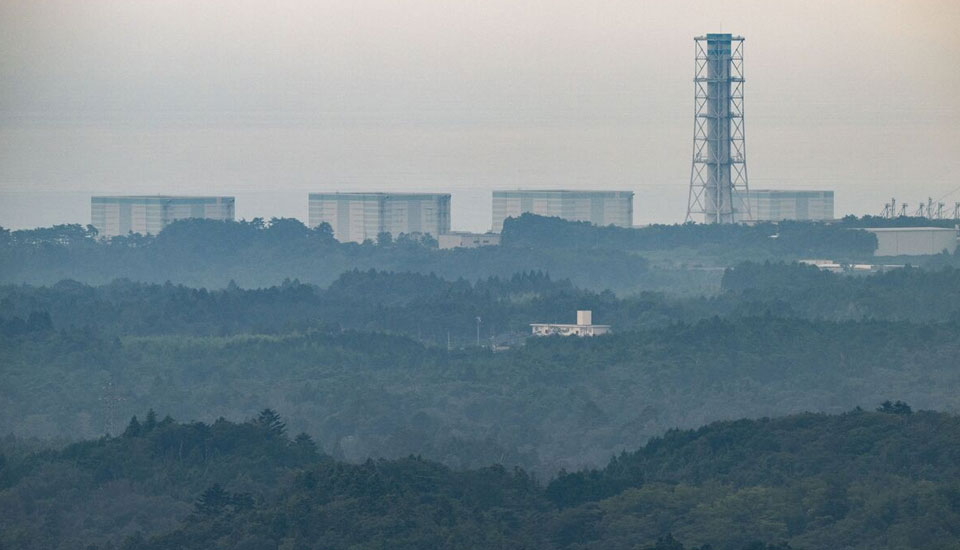
Japan started the release of treated wastewater from the Fukushima nuclear site into the Pacific Ocean in a process that could last about 30 years, triggering an immediate retaliation by China to curb seafood imports.
Tokyo Electric Power Co., which operates the wrecked power plant, confirmed its first discharge began as scheduled at about 1 p.m. local time Thursday. Within hours, China — the top buyer of Japan’s seafood — confirmed it would suspend imports of all aquatic products under steps to protect food safety.
“We have made serious démarches to Japan and asked it to stop this wrongdoing,” China’s foreign ministry said in a statement. In response, Japanese Prime Minister Fumio Kishida called on China to immediately remove the ban.
China is the largest single export market for Japanese fish, crustaceans and aquatic invertebrates, with Japanese companies shipping almost 72 billion yen ($496 million) worth to China last year. Hong Kong, another major importer, has also imposed curbs on Japanese food imports.
Though Japan’s process has been authorized as safe by the International Atomic Energy Agency, China and other opponents have questioned the accuracy of testing systems and insist the release of wastewater from a disaster site isn’t comparable with similar activities that are commonplace in the global nuclear sector.
Treatment process
Water used to cool wrecked reactors at the Fukushima Dai-ichi nuclear plant, along with groundwater and rain, becomes contaminated when in contact with melted fuel or debris. It’s treated using a filtration process known as the Advanced Liquid Processing System, or ALPS.
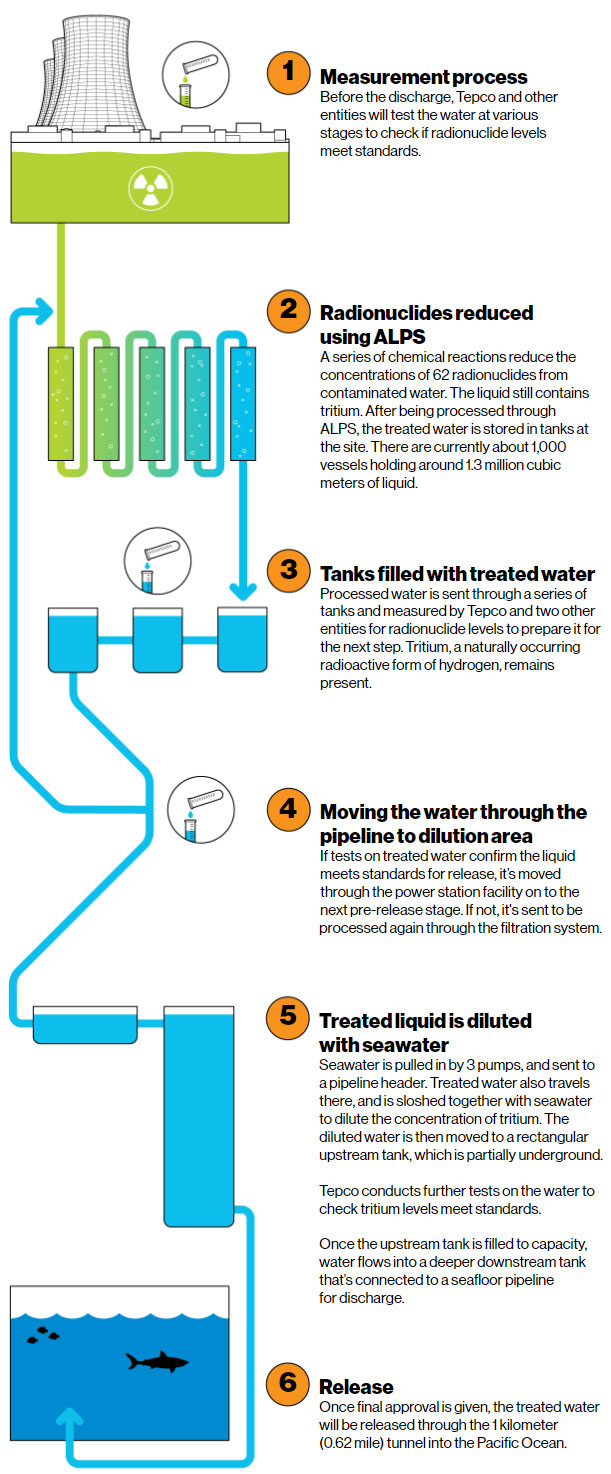
Tepco’s first discharge involves the release of about 7,800 cubic meters of treated water and will take about 17 days to complete, according to a document posted on the company’s website. The water will contain 1.1 trillion becquerels — a measure of radioactivity — of tritium, part of Tepco’s strategy to begin the process with relatively low concentrations of the radionuclide.
The company has a target to discharge less than 22 trillion becquerels of tritium a year, and expects to release 5 trillion becquerels as it carries out a total of four releases of treated water by the end of March.
China will step up radiation monitoring in its sea areas and watch for any impact from the Fukushima wastewater releases, the Ministry of Ecology and Environment said Thursday in a statement posted on its social media account. Tepco was also sampling seawater following the release, the company said.
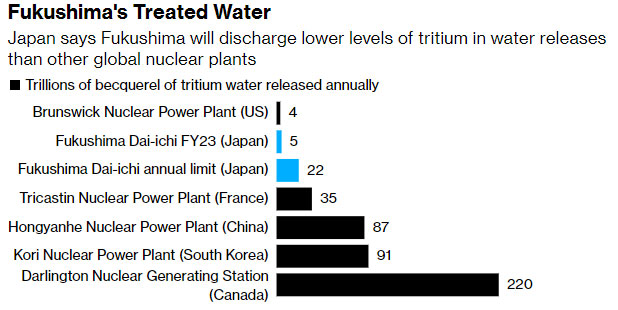
Sources: Tepco, Japan’s Ministry of the Environment and Ministry of Economy, Trade and Industry. Note: A becquerel is a measure of radioactivity.
A two-year IAEA review found Japan’s strategy would have a negligible impact on people and the environment. China is “an important trading partner for Japan” and Tepco will continue to explain the safety of its procedure, the company’s president Tomoaki Kobayakawa told reporters.
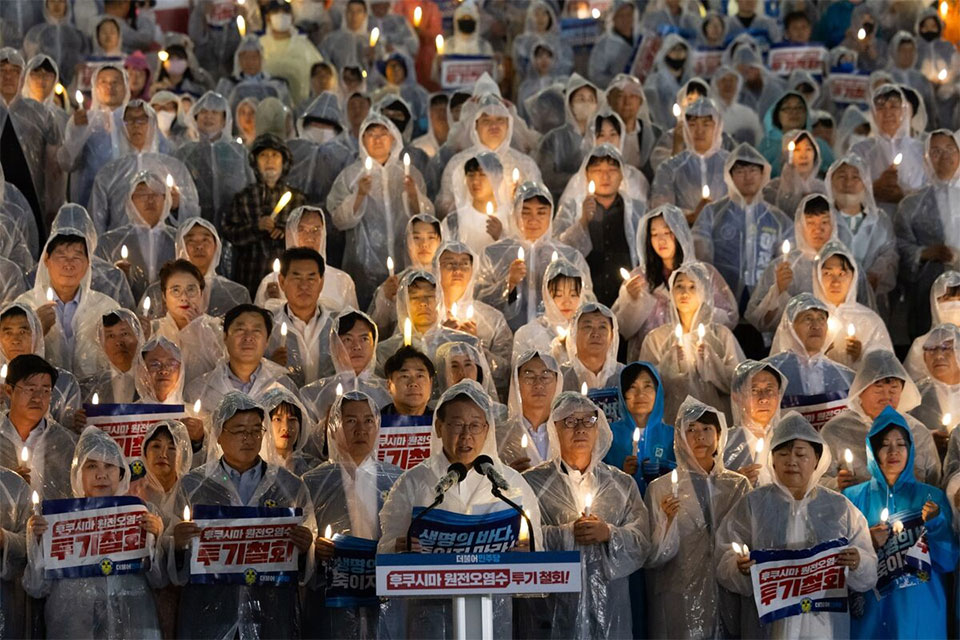
A protest against Japan’s decision to release treated wastewater, in Seoul, on Aug. 23.Photographer: SeongJoon Cho/Bloomberg
Relations between Japan and China have long been some of the most fraught in East Asia, with Tokyo accused by some of doing too little to atone for atrocities it committed during its invasion and colonization of parts of China in the first half of the 20th Century. More recently, ties have strained over issues including the pandemic and China’s intrusions into waters controlled by Japan but claimed by both sides.
In the past month, Tokyo has imposed restrictions on exports of chip-making equipment and last week signed an agreement with the US and South Korea which included criticism of Chinese actions in the South China Sea and a promise by the three nations to cooperate more on defense.
Natsuo Yamaguchi, leader of a junior party in Japan’s governing coalition, will go ahead with a visit to China next week, according to a party spokesperson. Japanese media reported he would carry a letter from Kishida to President Xi Jinping.
Tepco needs to release a total of about 1.3 million cubic meters of wastewater — equivalent in volume to about 500 Olympic-size swimming pools — as a fleet of about 1,000 storage tanks are hitting capacity. The waste has been generated in part as the utility works to cool wrecked reactors following the 2011 meltdown that ranks as the world’s worst atomic accident since Chernobyl.
Land currently housing the storage tanks also needs to be cleared to construct other facilities necessary to complete the decades-long decommissioning of the site.